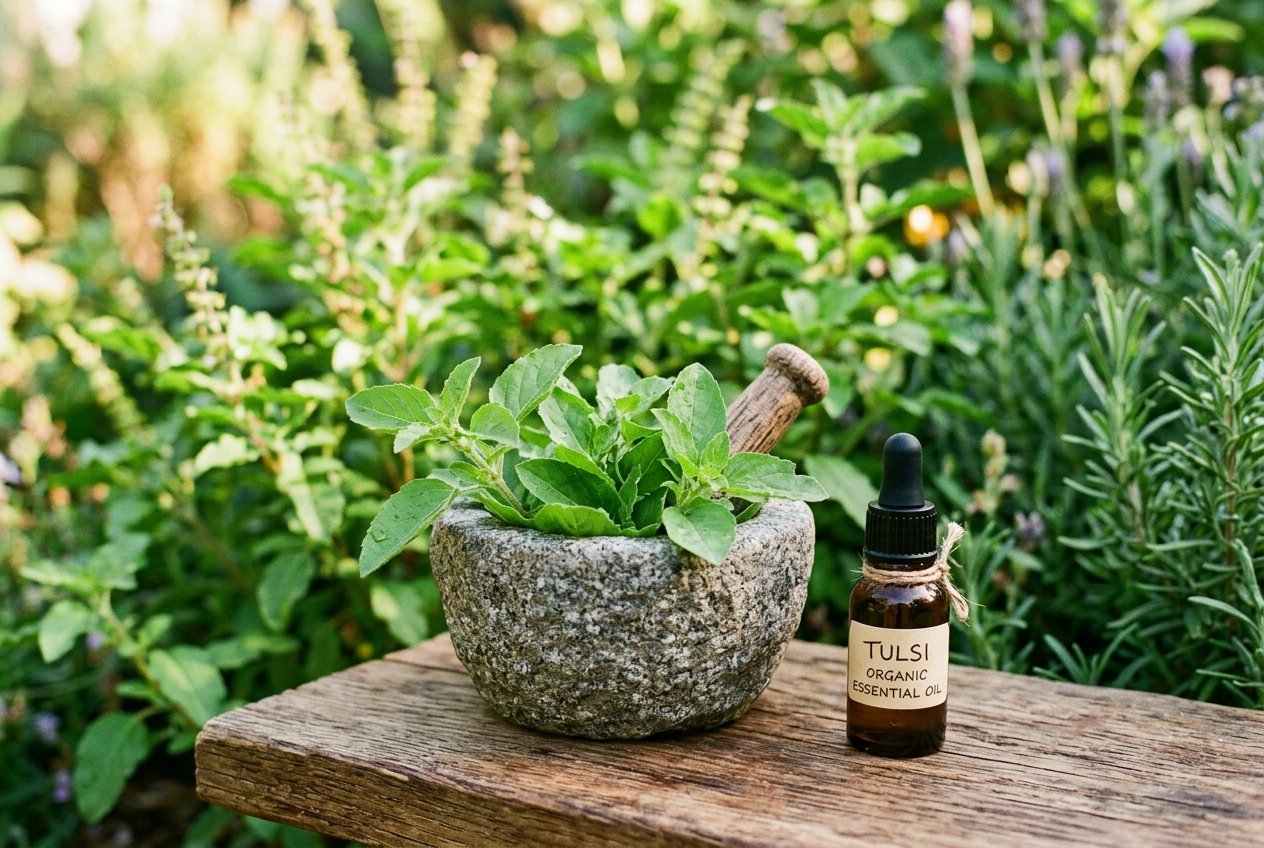
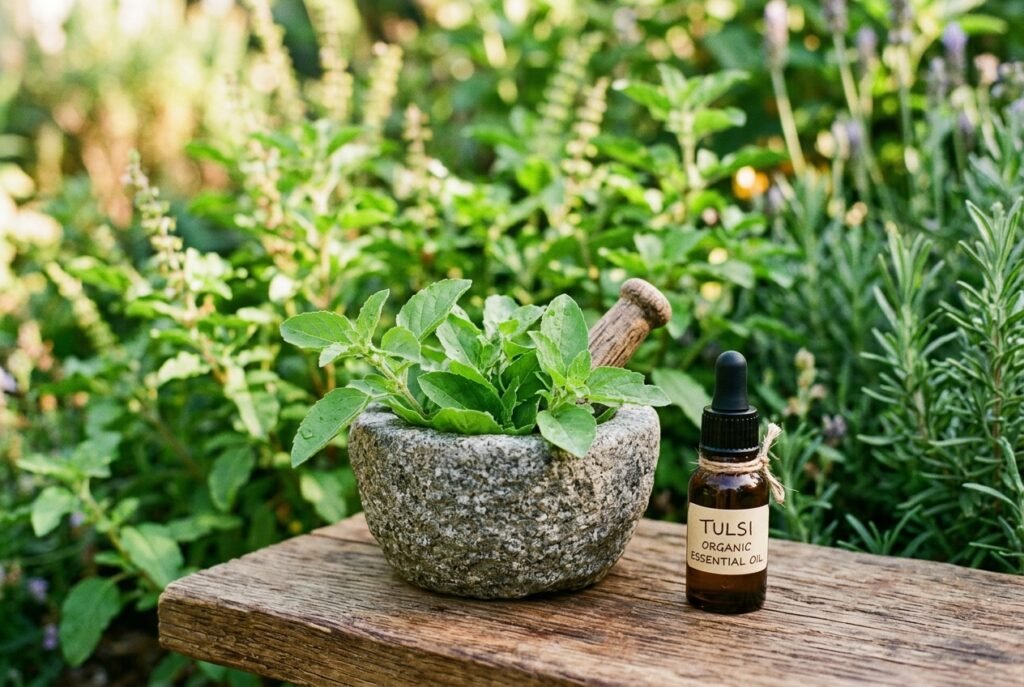
Tulsi, also known as Holy Basil, is highly revered in India, not only for its extensive medicinal properties but also for its spiritual significance. In Sanskrit, Tulsi means “the incomparable one,” and it is rightfully regarded as the “Queen of Herbs” in traditional Ayurvedic medicine.
A Natural Adaptogen and Respiratory Healer
Tulsi acts as a powerful adaptogen, helping the mind and body adapt to stress and environmental toxins. It has strong antimicrobial, anti-inflammatory, and antioxidant properties, making it highly effective for:
- Supporting respiratory function and relieving coughs and colds.
- Boosting the immune system against seasonal infections.
- Lowering blood sugar and cholesterol levels.
- Promoting emotional balance and mental clarity.
How to Consume Tulsi Daily
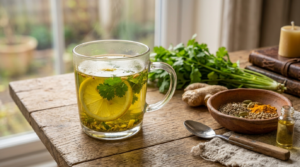
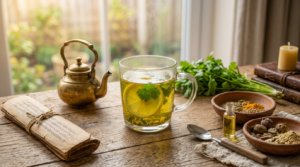
The simplest way to enjoy the healing benefits of Tulsi is by brewing a warm cup of Tulsi tea. Steep fresh or dried leaves in hot water for 5-7 minutes. Adding a teaspoon of organic honey or a pinch of dry ginger can enhance its respiratory healing properties.
Medical Disclaimer:The information provided in this article is for general educational and informational purposes only and should not be construed as professional medical advice, diagnosis, or treatment. Always seek the advice of a qualified physician or a registered Ayurvedic practitioner with any questions you may have regarding a medical condition, lifestyle changes, or dosage. Make sure to double-check the physical label of any herbal product to confirm ingredients, warnings, and usage instructions before consumption.